Chimney Liner Installation
Chimney Liner Installation Framingham MA
The Part of Your Chimney You Never See Does the Most Important Job
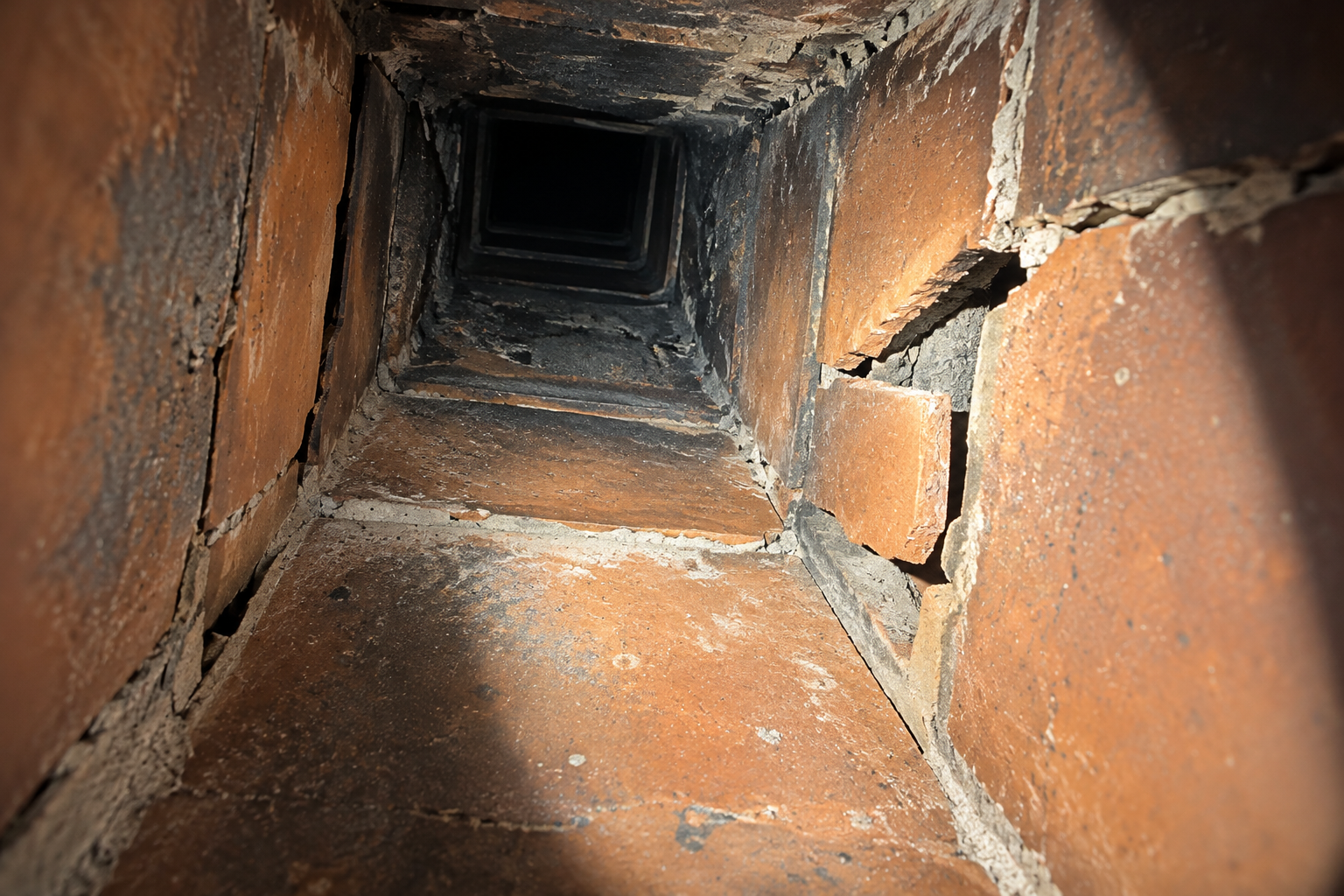
A chimney liner is the tube inside the brick that actually carries smoke, heat and combustion gases out of your house. Brick and mortar were never meant to do that job alone. Tests going back decades show that heat moves through unlined masonry fast enough to ignite nearby framing in a matter of hours, and the acids in wood, oil and gas exhaust eat mortar from the inside out.
Most Framingham homes built before the 1980s have clay tile liners. They work well until they crack, and freeze-thaw winters, chimney fires and simple age crack them. Full Spectrum Chimney Services installs new stainless steel liners and relines damaged flues across MetroWest, so the chimney does its four jobs again:
- Contains heat so it never reaches the wood around the chimney
- Carries carbon monoxide out instead of letting it seep through gaps
- Protects the masonry from corrosive exhaust and moisture
- Improves draft, so fires burn cleaner and creosote builds slower
Inside the Chimney
What a Relined Chimney Looks Like
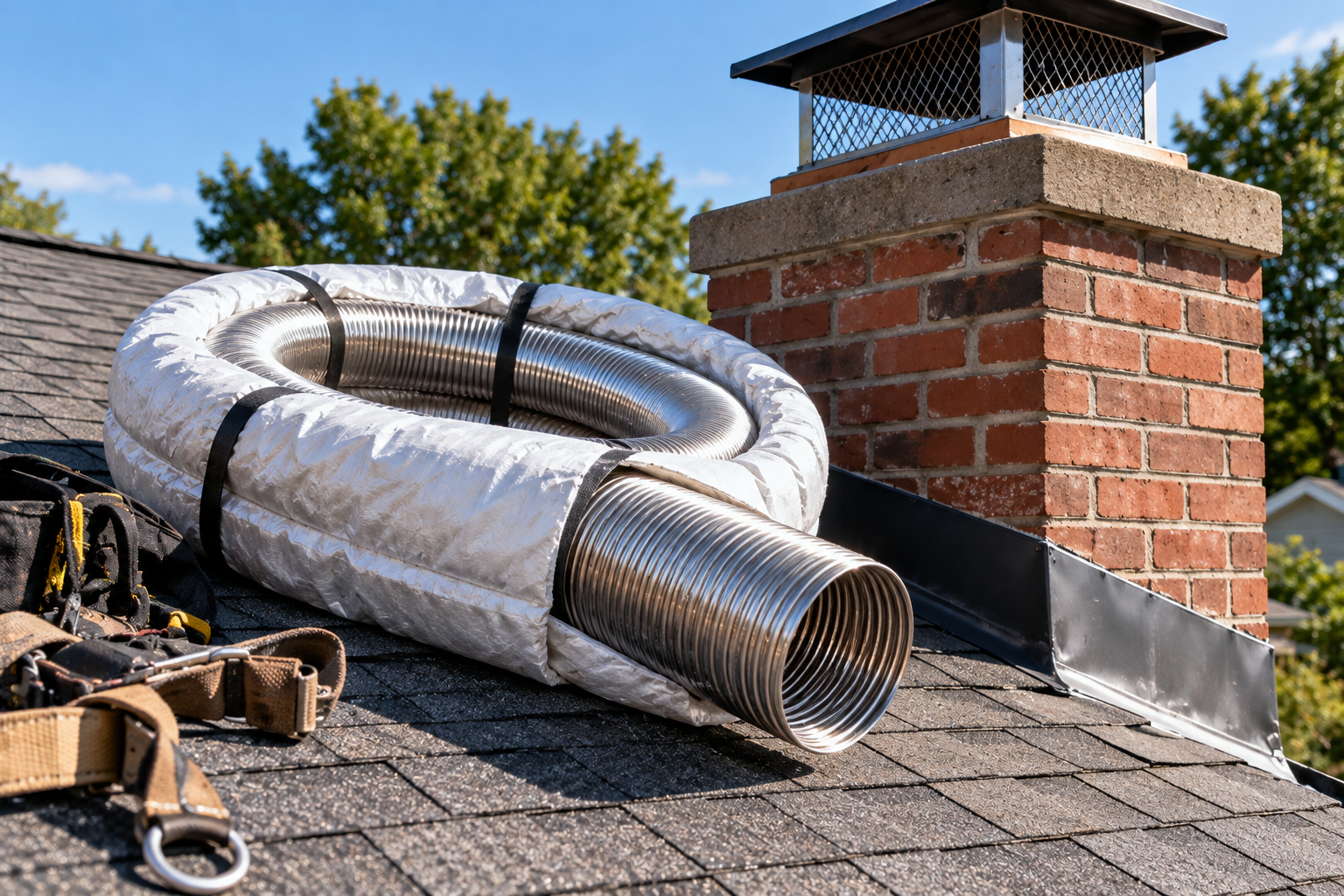
A stainless steel liner drops inside the existing flue, wrapped in insulation, and connects to the appliance below. The old clay tiles stay in place as a second shell.
Is My Chimney Liner Damaged?
Six Signs Your Liner Needs Attention
Most liner damage is hidden above the damper. These are the signs that show up where you can see them.
Tile Pieces in the Firebox
Shards of clay tile or crumbling mortar on the hearth came from a liner that is breaking apart above you.
Smoke Backing Up
Cracks and offsets in the liner disturb the draft, so smoke rolls into the room instead of rising.
Creosote Smell Indoors
A tar or campfire odor with no fire burning means gases are escaping through gaps in the flue.
Rust on the Damper
Rust or warping on the damper, connector pipe or an existing metal liner points to moisture and corrosion in the flue.
Damage on the Outside
Flaking brick, white staining or crumbling mortar on the stack often start with a failing liner letting heat and moisture into the masonry.
After a Chimney Fire
Thermal shock from a chimney fire cracks tiles even when nothing looks wrong from below. Any fire calls for a camera scan before the next burn.
The only way to confirm liner damage is a camera scan of the full flue, which is part of every Level 2 chimney inspection we perform.
Stainless Steel vs. Clay
Choosing the Right Liner
For a reline, stainless steel is the answer almost every time. It handles every fuel, resists the acids that destroy clay, heats up fast for a strong draft, and a flexible liner can follow the bends in an older chimney that a rigid tile never could. Clay tile still makes sense in new construction with a straight stack and an open wood fireplace.
| Liner | Typical Life | Best For |
|---|---|---|
| Stainless steel (304) | 20+ years, often a lifetime warranty | Wood stoves, inserts, open fireplaces |
| Stainless steel (316) | 20+ years, often a lifetime warranty | Gas and oil appliances, mixed fuel |
| Clay tile | 15 to 50 years, cracks with thermal shock | New masonry chimneys, open wood fireplaces |
| Cast-in-place | 30 to 50+ years | Structurally weak flues that need reinforcing |
Sizing matters as much as material. A liner that is too large for the appliance cools the exhaust and builds creosote, one too small restricts the draft. We size every liner to the stove, insert or fireplace it serves.
Does My Chimney Need Relining?
When a New Liner Is the Right Call
Some of these are safety issues, some are code requirements, and a few are both.
Safety Reasons
- Cracked, spalled or missing clay tiles found on a camera scan
- An unlined chimney, common in older New England homes
- After a chimney fire or lightning strike
- Gas or oil appliance venting into clay tile, which the acidic exhaust slowly destroys
Appliance Reasons
- Installing a wood stove insert. The insert needs a properly sized liner connected directly to it.
- Switching fuel or replacing a furnace or boiler. The new appliance usually needs a different flue size.
- Oversized flue that lets gases cool, condense and build creosote
- Selling the home. A Level 2 inspection at sale often turns up liner damage the buyer will want fixed.
Our Process
How We Reline a Chimney
A single-flue stainless steel reline is usually finished in one day.
Scan and Measure
A camera scan confirms the damage and we measure flue length, diameter and offsets.
Size and Select
Liner grade and diameter matched to the appliance, with insulation wrap for wood-burning systems.
Install Top-Down
The liner feeds in from the roof, is secured at the top plate and connected to the stove, insert or firebox below.
Test and Document
We check the draft, fit the cap, and leave you photos of the finished install.
Chimney Liner Replacement Near Me
Why Not Do It Yourself?
Flexible liner kits exist, and the question comes up. The honest answer is that the liner itself is the easy part. Getting the diameter right for the appliance, insulating it correctly, working a 25-foot coil down a flue with offsets from a steep roof, and sealing the connection at the bottom are where kits go wrong, and a liner that is wrong is a liner that leaks heat and gas into the house.
A professional install also comes with a camera scan before and after, which is the only proof that the flue is sound. Pair the reline with a chimney sweep if there is creosote in the old flue, and with masonry repair if the crown or brickwork has been letting water in. Both are things we see on the same visit.
Heat Moves Through Unlined Brick in Hours, Not Days
That is why fire codes require a working liner on every chimney, and why a cracked one is not a wait-until-spring repair.
FAQ
Chimney Liner Questions, Answered
What is a chimney liner and why do I need one?
A chimney liner is the tube inside the masonry, made of clay tile, stainless steel or cast-in-place concrete, that carries smoke and combustion gases out of the house. It keeps heat away from the wood framing around the chimney, keeps carbon monoxide from seeping through gaps in the brick, and protects the masonry from the acids in exhaust. National fire safety standards require a working liner on every chimney that serves a fireplace or heating appliance.
How do I know if my chimney liner is damaged?
Look for pieces of clay tile or mortar in the firebox, smoke backing into the room, a creosote or tar smell indoors when nothing is burning, rust on the damper or connector pipe, and flaking brick or white staining on the outside of the chimney. Damage is also likely after any chimney fire. Because most cracks are above the damper, a camera scan of the flue is the only way to confirm it.
Is it safe to use a fireplace with a cracked flue liner?
No. Cracks let heat reach the framing around the chimney and let carbon monoxide into living spaces. Stop using the fireplace or appliance until the flue has been scanned and either repaired or relined.
Stainless steel or clay: which chimney liner is better?
For relining an existing chimney, stainless steel. It handles wood, gas, oil and pellet fuel, resists the acidic condensation that breaks down clay, heats up quickly for a stronger draft, and a flexible liner can navigate bends. Grade 304 suits wood-burning systems and grade 316 suits gas and oil. Clay tile is a sound choice for new construction with a straight flue and an open wood fireplace, but it cracks under thermal shock and is difficult to repair once installed.
How long does a chimney liner last?
Stainless steel liners commonly last 20 years or more and often carry a lifetime warranty. Clay tile liners last anywhere from 15 to 50 years depending on how hard they are used and how many freeze-thaw winters and chimney fires they survive. Cast-in-place liners commonly last 30 to 50 years. Yearly inspection catches wear on any of them before it becomes a hazard.
How long does chimney relining take?
A standard stainless steel reline of a single flue is usually completed in one day, including the camera scan, installation, connection and final check. Multiple flues, heavy creosote that must be removed first, or masonry repairs to the crown or smoke chamber can add a day.
Do I need a new liner for a wood stove insert?
In almost every case, yes. An insert needs a liner sized to its outlet and connected directly to it. Venting an insert into an oversized, open masonry flue lets gases cool and condense, builds creosote fast, and is not permitted by most manufacturers or codes.
Can I reline my chimney myself?
Flexible liner kits are sold, but relining is a complex job: the liner has to be sized correctly for the appliance, insulated properly, worked down a flue that may have offsets, sealed at the top plate and connected securely at the bottom, all from a roof. An incorrect install leaks heat and gas into the house. A professional install also includes a camera scan before and after, which is the only proof the flue is sound.
Is a cracked chimney liner covered by homeowners insurance?
Sometimes. If the damage was caused by a sudden event such as a chimney fire, lightning or a storm, it may be covered. Deterioration from age, freeze-thaw cycles or deferred maintenance usually is not. A written inspection report with camera photos is helpful either way.
How much does chimney relining cost?
It depends on the height and diameter of the flue, the liner grade, whether insulation is required, the number of bends, the appliance it connects to, and whether creosote removal or masonry repair is needed first. Every job is quoted after a camera inspection. Contact us for a personalized estimate.
Contact Us
Reline It Before the Next Burning Season
Full Spectrum Chimney Services installs stainless steel liners and relines damaged flues from our base at 945 Concord Street in Framingham and across MetroWest: Natick, Ashland, Sudbury, Marlborough, Weston and Newton. Every reline starts and ends with a camera scan you can see for yourself.
Call (774) 410-7673 or request a free estimate online, and burn with a flue you can trust.
Make Sure Your Fireplace Is Safe and Ready to Use.
Request a sweep, inspection, repair estimate or fireplace consultation today.
Free Estimates