
Chimney Leak Repair
Chimney Leak Repair Framingham MA
A Sound Chimney Never Lets Water In
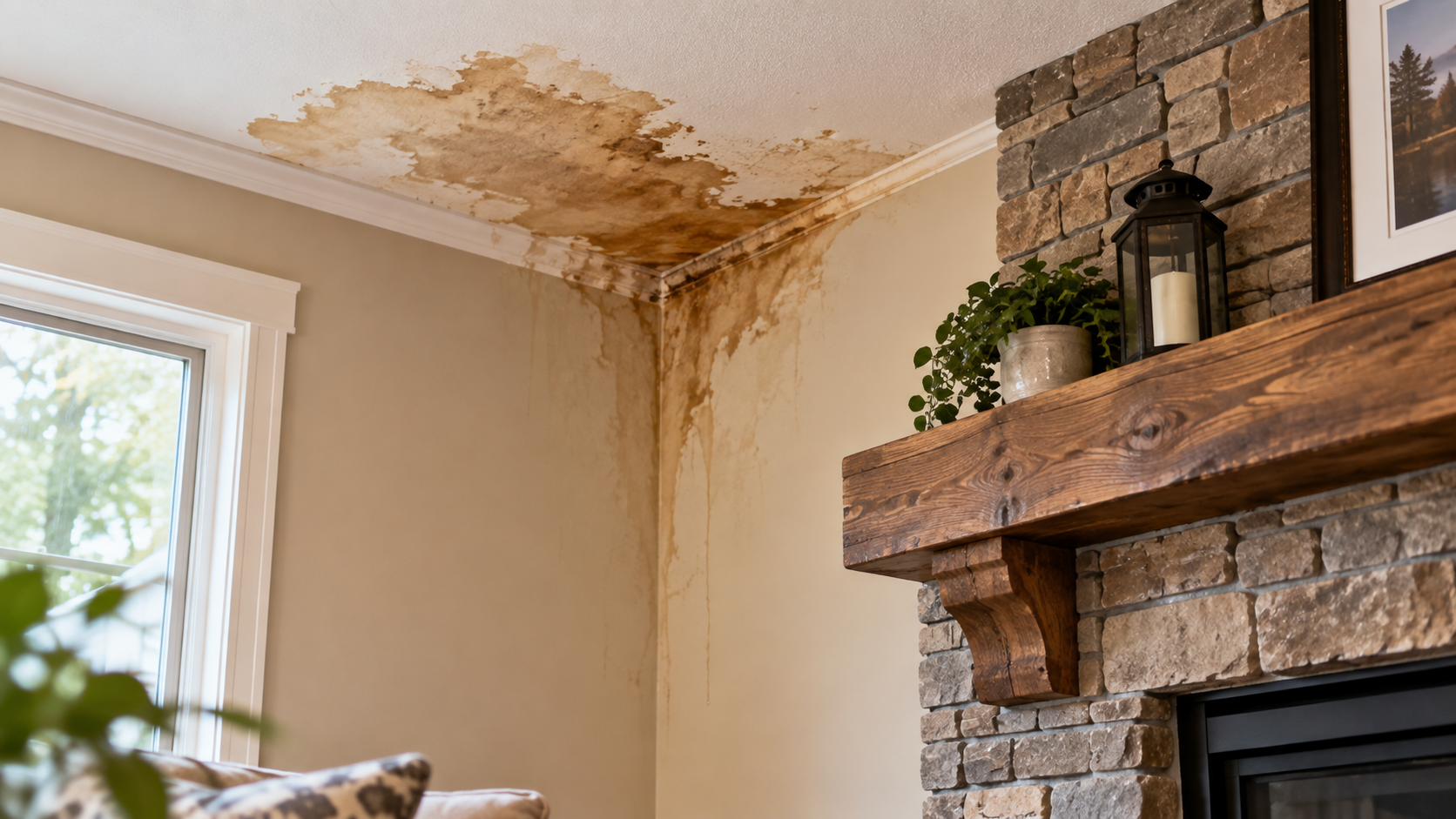
Water in the firebox, a stain creeping across the ceiling, a musty smell after a storm: none of it is normal, even in heavy rain. A chimney is built with layers of protection, and a leak means one of them has failed.
The hard part is that water travels. It can enter at the top of the chimney and show up ten feet away on a bedroom ceiling, which is why so many leaks get patched in the wrong place. Full Spectrum Chimney Services tracks the water back to where it actually gets in, fixes that, and then protects the masonry so it stays dry.
- Leak detection from the chimney top down to the attic
- Flashing, crown and masonry repair matched to the real cause
- Breathable waterproofing once the repairs are done
- Photos of what we find, so you see it for yourself
Why Is My Chimney Leaking?
Five Places Chimney Leaks Start
Almost every chimney leak in MetroWest comes back to one of these five spots, and often more than one at a time.
Chimney Cap
With no cap, or a rusted one, rain falls straight down the flue. It is the simplest leak to prevent, and a new chimney cap solves it.
Crown
The sloped slab on top of the brickwork. Thin or mortar-built crowns crack, and every crack funnels water into the core of the chimney.
Flashing
The metal seal where chimney meets roof. When it rusts, lifts or has been smeared with tar, water runs behind it into the attic.
Mortar Joints
Mortar weathers faster than brick. Eroded joints leave open channels that carry water deep into the stack.
Porous Brick
Brick is a sponge. Once it is saturated, water moves through the wall and every freeze makes the damage worse.
Signs of a Chimney Leak
What You See and What It Usually Means
A starting point, not a diagnosis. Two causes often overlap, which is why we inspect the whole system before recommending a repair.
| What You Notice | Most Likely Source | The Usual Fix |
|---|---|---|
| Stain on a ceiling or wall near the chimney | Failed flashing, sometimes a cracked crown | Flashing repair or replacement, crown repair |
| Water or dripping sounds in the firebox | Missing or damaged cap, cracked crown | New cap, crown repair or rebuild |
| White, chalky staining on the brick | Saturated masonry pushing salts to the surface | Repair joints, then breathable waterproofing |
| Flaking brick faces or crumbling mortar | Freeze-thaw damage from trapped water | Brick replacement and repointing |
| Rusted damper or firebox metal | Rain entering an open or poorly capped flue | Cap installation, damper service |
| Musty smell from the fireplace | Ongoing moisture somewhere in the system | Full inspection to find the entry point |
Seeing crumbling mortar or loose brick? That has moved past a leak into structural territory. Our chimney repair page covers repointing, crown rebuilds and brick replacement.
Our Process
How We Find and Fix a Chimney Leak
Guessing is how leaks get repaired twice. We work through the same four steps on every job.
Inspect Top to Bottom
Cap, crown, brickwork, flashing, attic framing and firebox. A full chimney inspection when the source is hidden.
Show You the Cause
You get photos of the entry point and a clear explanation, before any work is quoted.
Repair the Source
We fix what is letting water in: cap, crown, flashing, joints or brick. No tar patches.
Seal and Protect
Sound masonry is treated with a breathable water repellent so it stays dry.
Chimney Waterproofing
Waterproofing That Lets Your Chimney Breathe
Done right, chimney waterproofing works. We apply a vapor-permeable water repellent made for masonry. It soaks into the brick and mortar, stops liquid water from soaking in, and still lets moisture inside the chimney escape as vapor.
That last part matters. Paint, clear coats and hardware store sealers form a film on the surface. They trap moisture inside the brick, and trapped moisture is exactly what destroys a chimney in a New England winter.
- Repairs come first. Waterproofing cannot fix a cracked crown, open joints or bad flashing, and it should never be used to hide them.
- Clean, dry masonry. The treatment bonds properly only to a prepared surface.
- Years of protection. A professional application commonly lasts 5 to 10 years, depending on exposure and the condition of the brick.
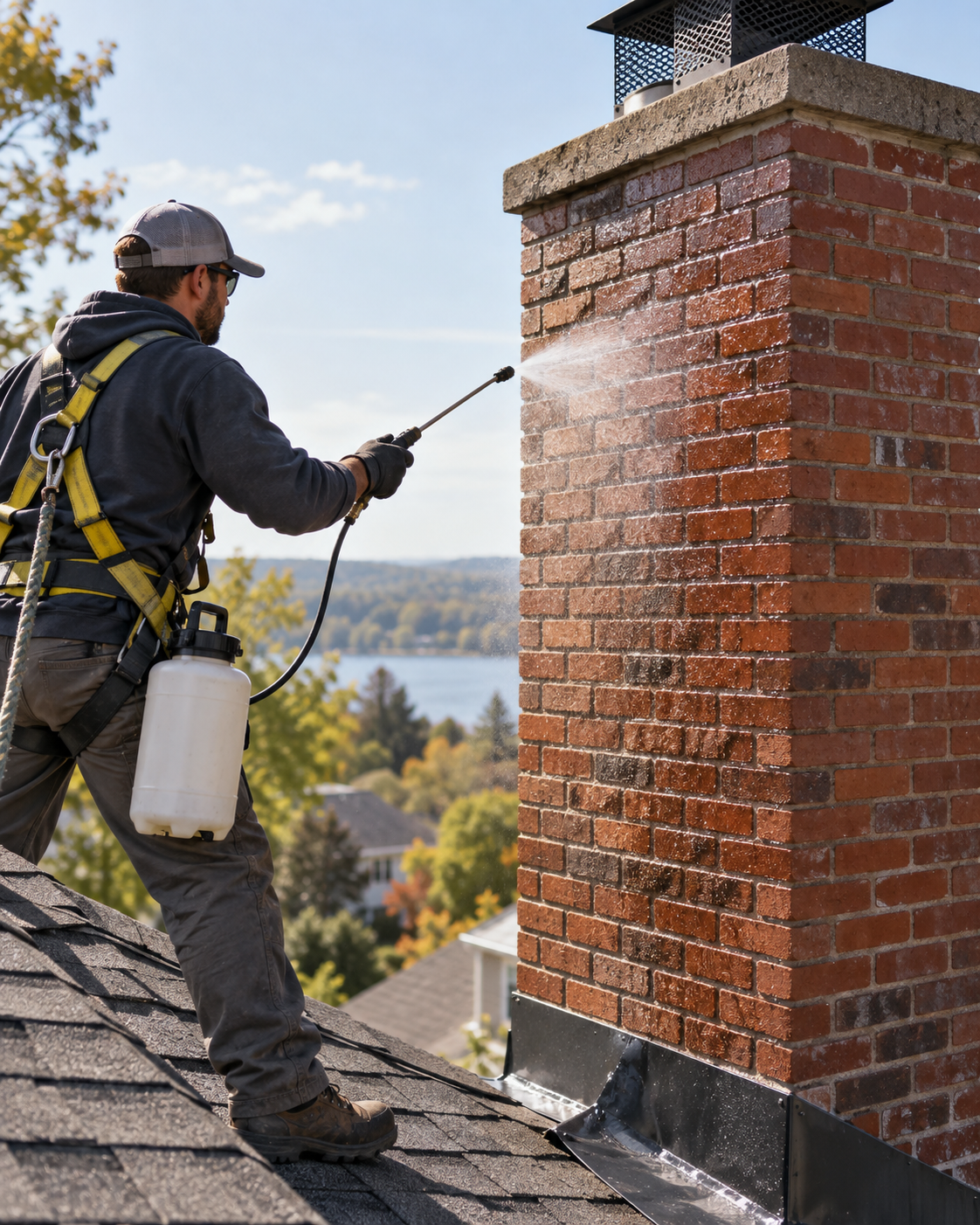
Water Expands 9 Percent When It Freezes
Every freeze pries the crack a little wider, and every thaw lets more water in. A small leak left through one Massachusetts winter rarely stays small.
Who Fixes a Chimney Leak?
Roofer or Chimney Company?
Both have a role. The right call depends on where the water is getting in.
A Roofer Handles
- Shingles and underlayment around the chimney
- Step flashing woven into the roofing
- Leaks that turn out to be roof leaks near the chimney
A Chimney Company Handles
- The cap, crown, brick and mortar
- Counterflashing set into the masonry joints
- The flue liner, damper and firebox
- Tracing the leak to its true entry point before anyone starts repairs
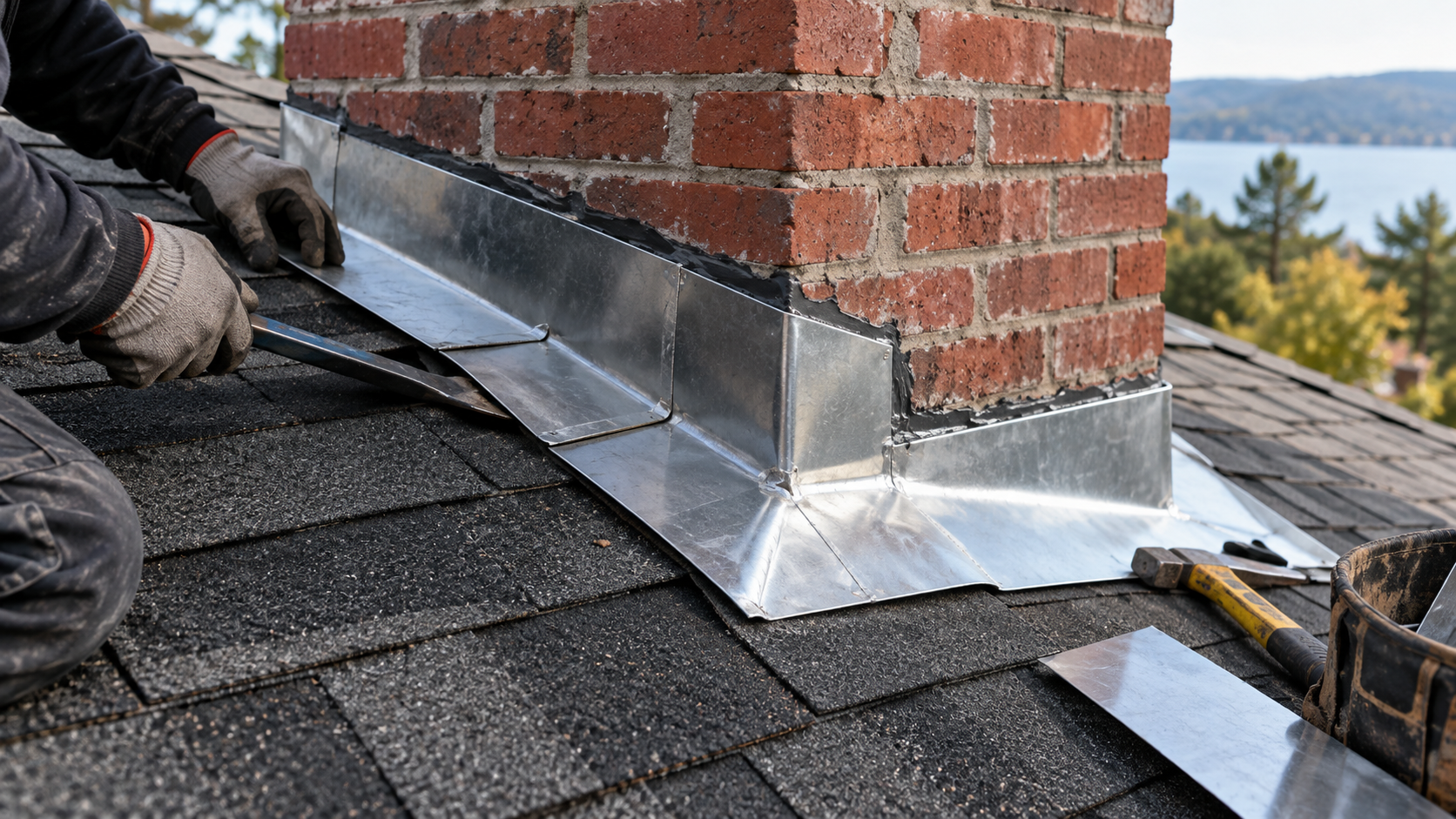
If you are not sure which one you need, start with the chimney. Most water that shows up near a chimney enters through the chimney itself, and a proper look from the top down settles the question either way.
Regular chimney maintenance and a yearly chimney sweep catch most of these problems while they are still small, long before water reaches your ceiling.
FAQ
Chimney Leak Questions, Answered
Why does my chimney leak when it rains?
Because one of its protective parts has failed. The usual causes are a missing or damaged chimney cap, a cracked crown, failed flashing where the chimney meets the roof, eroded mortar joints, or brick that has become porous enough to soak up rain. Heavy or wind-driven rain simply exposes the weak spot.
Is it normal for a chimney to leak during heavy rain?
No. A sound cap, crown, flashing system and masonry should keep water out in any weather. If you see water in the firebox, in the attic or on a ceiling or wall near the chimney, something has failed and it will get worse with each storm.
What should I do if my chimney is leaking?
Contain the water indoors, take photos of the affected areas, and stop using the fireplace until it has been checked, since water can damage the liner and metal parts. Then schedule an inspection that covers the cap, crown, flashing, masonry, attic and flue. The lasting repair has to match the actual entry point.
How do I know if my chimney flashing is bad?
From the ground or a window, look for rusted, bent, lifted or missing metal where the chimney meets the roof, or thick patches of tar and sealant covering it. Indoors, the signs are water stains, damp attic wood or a musty smell near the chimney after rain. Good flashing lies flat, overlaps in steps with the shingles, and is set into the mortar joints.
Does chimney waterproofing work, and how long does it last?
Yes, when a breathable, vapor-permeable masonry water repellent is applied to sound brickwork. It keeps rain from soaking in while letting trapped moisture escape, which limits flaking brick, freeze-thaw damage and white staining. A professional application commonly lasts 5 to 10 years. It does not replace repairs: cracks, open joints and bad flashing must be fixed first.
Can a leaking chimney cause mold?
Yes. A leak can wet the masonry and the wood, drywall and insulation around it, and materials that stay damp can grow mold, especially in closed spaces with little airflow. Fixing the leak removes the moisture source, but any materials that already have mold still need to be cleaned or replaced and the area dried completely.
Is a chimney leak covered by homeowners insurance?
It depends on the cause and on your policy. Sudden damage from a covered event, such as a storm, lightning or a fallen tree, may be covered. Gradual wear, deterioration and deferred maintenance usually are not. A written inspection report with photos that identifies the cause is helpful if you file a claim.
Who fixes chimney leaks, a roofer or a chimney company?
A roofer is the right call for shingles and roof-side flashing. A chimney company handles the cap, crown, brick, mortar, counterflashing and liner, and can trace the leak to its true entry point. Since most leaks near a chimney start in the chimney itself, a chimney inspection is usually the best first step.
How much does it cost to fix a chimney leak?
It depends on where the water is getting in. A cap, a crown repair, new flashing, repointing and brick replacement are very different jobs, and roof height, access and the extent of the damage all affect the price. Every job is quoted after an inspection. Contact us for a personalized estimate.
Contact Us
Stop the Leak Before It Spreads
Full Spectrum Chimney Services repairs leaking chimneys from our base at 945 Concord Street in Framingham, and across MetroWest: Natick, Ashland, Sudbury, Marlborough, Weston and Newton. Every visit starts with finding the real source, and you see the photos before we quote the fix.
Call (774) 410-7673 or request a free estimate online before the next storm finds the same gap.
Make Sure Your Fireplace Is Safe and Ready to Use.
Request a sweep, inspection, repair estimate or fireplace consultation today.
Free Estimates