Chimney Cap Installation
Chimney Cap Installation Framingham MA
A Small Part That Protects the Whole Chimney
A chimney cap is a metal hood with mesh sides that sits over the flue opening. It lets smoke out and keeps almost everything else from getting in. Here is what it does all day, every day:
Blocks Rain and Snow
Acts as a small roof over the flue, so water cannot pour straight into your chimney.
Keeps Animals Out
Mesh sides stop birds, squirrels and raccoons from nesting in a warm, dark flue.
Stops Debris
Leaves and twigs stay out, so nothing collects where it could block the flue or catch fire.
Arrests Sparks
The screen catches embers before they land on your roof or the trees around it.
Eases Downdrafts
The hood breaks up wind that would otherwise push smoke and cold air back down.
Do I Need a Chimney Cap?
What Happens Without One
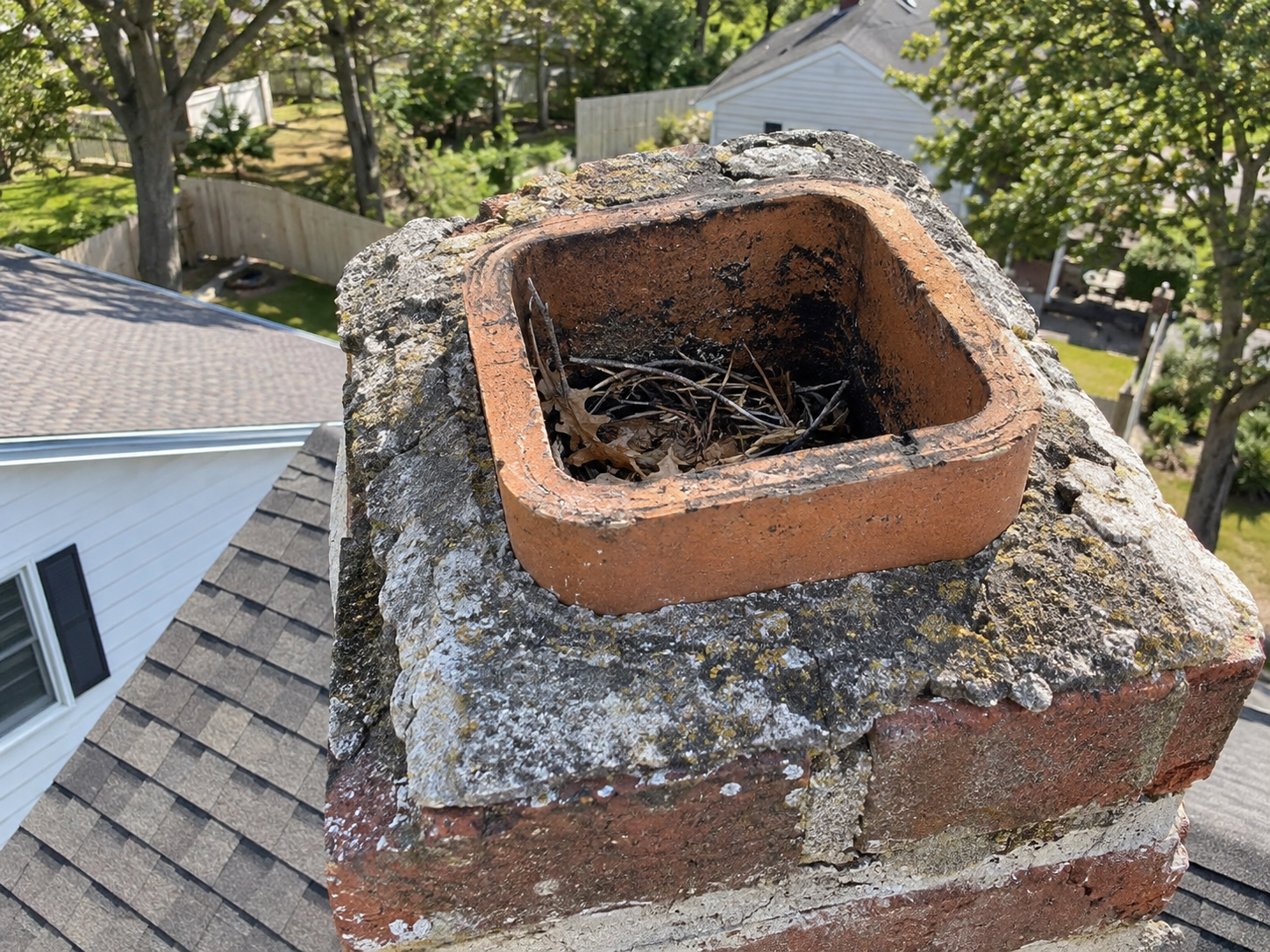
An uncapped flue is an open hole in the top of your house. A chimney will still vent without a cap, but it is exposed to everything the weather and the wildlife can send down it.
- Water damage. Rain and snow soak the flue, rust the damper and crack masonry as it freezes. An open flue is the number one cause on our chimney leak repair list.
- Nests and blockages. Nesting material blocks the flue and can send smoke and carbon monoxide back into the house.
- Fire risk. Dry leaves and twigs inside the flue, and live embers leaving it.
- Smells. Damp soot and anything that got in and could not get out.
Not sure if you have one? Look at the top of the chimney from the yard with binoculars. If you see a bare clay tile or an open pipe with no metal hood over it, there is no cap.
Know the Parts
Chimney Cap vs. Crown vs. Chase Cover
Three parts that get mixed up all the time. They sit in the same place and do different jobs, and most chimneys need two of them.
Chimney Cap
The metal hood and mesh over the flue opening. Keeps rain, animals and debris out of the flue itself. Every chimney type uses one.
Chimney Crown
The sloped concrete slab that covers the top of a brick chimney around the flue. It sheds water away from the brickwork. A cracked crown is a chimney repair, not a cap problem.
Chase Cover
The metal pan that covers the top of a framed, factory-built chimney. It does the crown's job on a prefab system, and the cap sits above it.
What Type of Chimney Cap Is Best?
Choosing the Right Material
For most MetroWest homes, stainless steel is the best balance of lifespan, strength and value. Copper is the premium choice for historic and high-end homes. Fit comes before material: the cap has to match the flue size, the number of flues and the appliance it vents.
| Material | Typical Life | Good to Know |
|---|---|---|
| Stainless steel | 20+ years, often a lifetime | Resists rust and heat, no upkeep |
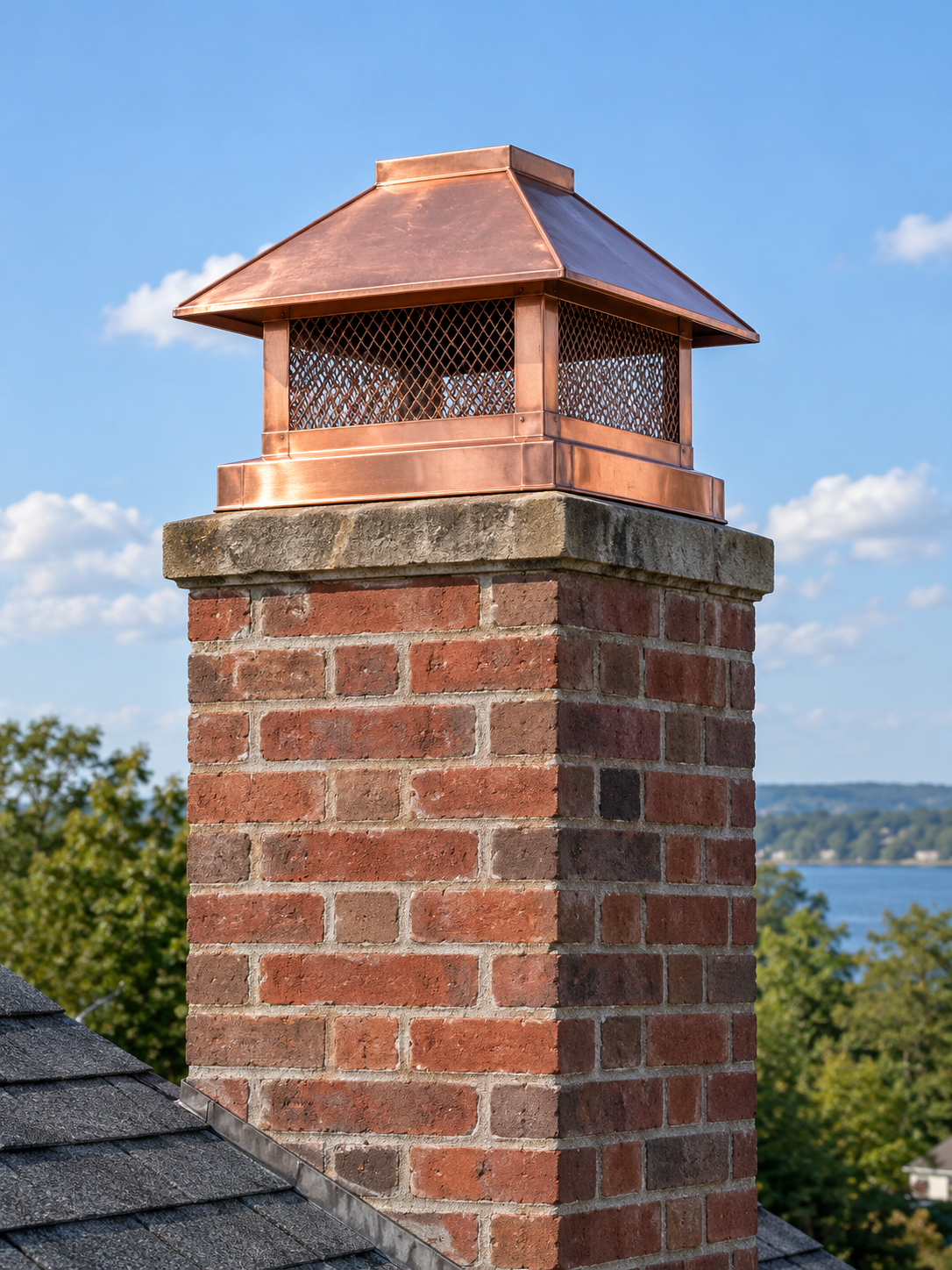
| Copper | 50+ years | Ages to a green or brown patina, premium look |
| Galvanized steel | 3 to 10 years | Budget option, rusts once the coating wears |
| Aluminum | 5 to 15 years | Light and soft, can bend in storms |
One flue or several? A single-flue cap clamps to one tile. A multi-flue or full-coverage cap spans the whole top, protects the crown as well, and is the better pick when a chimney has two or more flues.
Chimney Cap Replacement
Signs Your Chimney Cap Needs Replacing
Caps take the worst of every storm. Replace based on condition, not age.
From Outside
- Rust flaking off, holes, or rust streaks on the brick or roof
- Torn or missing mesh that a bird or squirrel could fit through
- A bent, tilted or loose hood after high wind or a fallen branch
- No cap at all, often blown off without anyone noticing
From Inside
- Water in the firebox or a damp smell after rain
- Scratching or chirping in the flue
- Leaves, twigs or debris on the hearth
- Smoke backing up because a damaged cap or clogged screen is blocking the flue
About downdrafts: a standard cap helps with wind blowing across the chimney top. For stubborn wind problems, a wind-directional or vacuum-style cap can help a lot. No cap will fix smoke problems caused by negative pressure inside a tight house, a cold exterior flue, a blockage or a flue that is the wrong size. If smoke is coming back into the room, start with a chimney inspection so the real cause gets fixed.
Our Process
How We Install a Chimney Cap
Most single-flue installs are done in one visit.
Measure
Flue size and shape, number of flues, crown dimensions and the clearance the vent needs.
Match
We choose a cap suited to your fuel and appliance. Gas and factory-built systems need approved terminations.
Fit and Secure
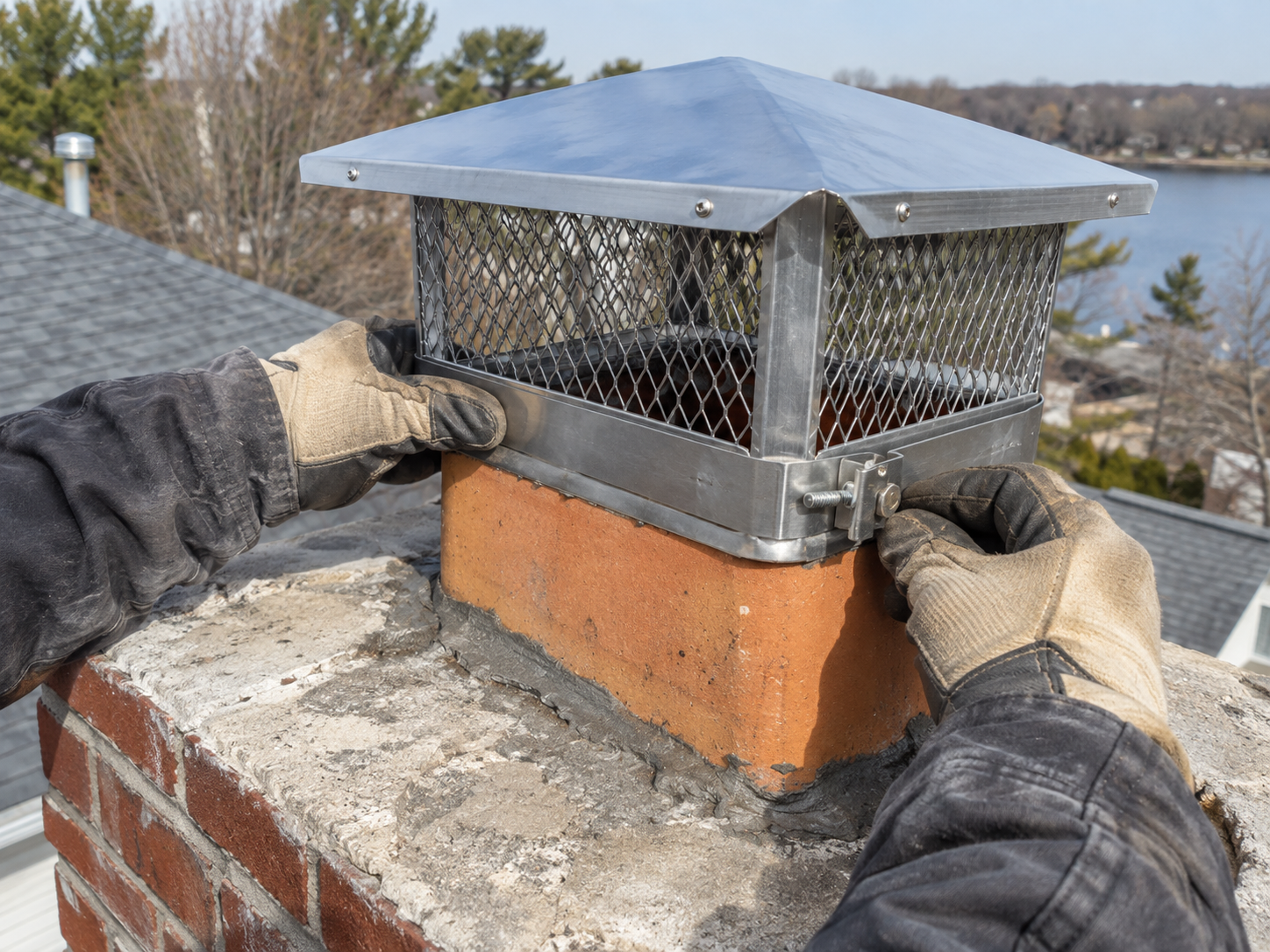
Clamped to the flue tile or anchored to the crown, so it stays put in a nor'easter.
Check the Top
While we are up there we look over the crown, flue tile and flashing, and show you photos.
Chimney Cap Replacement Near Me
Can You Install a Cap Yourself?
Sometimes, yes. A clamp-on cap for a single clay flue is a simple job for someone who is comfortable and safe on a roof. Measure the outside of the flue tile, buy the matching size, and tighten it evenly.
It is worth calling us when the roof is steep or high, when the chimney has more than one flue, when the crown is cracked or crumbling, or when the vent serves a gas appliance or a factory-built fireplace. The wrong cap on those systems can restrict the exhaust, and that is a safety problem, not a cosmetic one.
A cap is also the ideal add-on to a yearly chimney sweep: we are already at the top of the chimney, and any nest or debris gets cleared before the new cap goes on. Keeping up with chimney maintenance means the cap gets checked every year too.
FAQ
Chimney Cap Questions, Answered
Do I really need a chimney cap?
In almost every case, yes. A chimney will vent without one, but an open flue lets in rain and snow that damage the masonry and rust the damper, gives birds, squirrels and raccoons a place to nest, collects leaves and debris, and lets sparks escape onto the roof. Some gas and factory-built systems use a specific approved termination in place of a standard cap, which is why the cap should always be matched to the appliance.
Will a chimney leak without a cap?
Over time, almost certainly. With the flue open to the sky, rain and snow fall straight down it, pool in the firebox or smoke shelf, and soak into the brick and mortar. A cap stops that direct entry. It will not fix leaks that come from the crown, flashing or porous brick, so if water continues after a cap is installed, those are the next places to look.
How do I tell if my chimney has a cap?
Look at the top of the chimney from the ground with binoculars or a phone camera zoomed in. A capped chimney has a metal hood with mesh sides sitting above the flue. If you can see a bare clay tile or an open metal pipe with nothing over it, there is no cap.
What type of chimney cap is best?
For most homes, a properly sized stainless steel cap: it resists rust and heat, needs no upkeep and lasts for decades. Copper is the premium option and lasts even longer while aging to a patina. Galvanized steel and aluminum cost less but wear out much sooner. For windy sites, a wind-directional or high-wind design is worth considering.
How long does a chimney cap last?
It depends on the metal and the exposure. Galvanized steel commonly lasts 3 to 10 years, aluminum 5 to 15, stainless steel 20 years or more, and copper 50 years or more. Storms, falling branches and salt or acidic moisture shorten those numbers, so a cap should be checked every year and replaced based on its condition.
Do chimney caps keep animals out?
Yes. A solid cap with intact mesh keeps out birds, squirrels, raccoons and most other animals while still letting smoke escape. Caps fail at this when the metal is flimsy, the mesh is torn or the fit leaves gaps, which is why sturdy stainless steel or copper and a snug installation matter. If animals are already inside, they need to be removed before the cap goes on.
Can a chimney cap stop downdrafts?
It can help when wind is the cause. A standard cap deflects wind blowing across the flue, and specialized wind-directional or vacuum-style caps do more for stubborn cases. A cap cannot fix downdrafts caused by negative air pressure in the house, a cold flue, a blockage or an undersized chimney, so persistent smoke problems should be diagnosed first.
Can I install a chimney cap myself?
A clamp-on cap for a single clay flue is a manageable project if you are safe working on a roof. Hire a professional for steep or high roofs, multi-flue or custom caps that anchor to the crown, a damaged crown, or any gas or factory-built system that needs a manufacturer-approved cap.
How much does chimney cap installation cost?
It depends on the material (galvanized, stainless steel or copper), the size and number of flues, whether a stock cap fits or a custom one is needed, and how easy the roof is to reach. Every job is quoted up front. Contact us for a personalized estimate.
Contact Us
Get Your Chimney Capped
Full Spectrum Chimney Services measures, supplies and installs chimney caps from our base at 945 Concord Street in Framingham, and throughout MetroWest: Natick, Ashland, Sudbury, Marlborough, Weston and Newton.
Call (774) 410-7673 or request a free estimate online, and close the biggest opening in your roof.
Make Sure Your Fireplace Is Safe and Ready to Use.
Request a sweep, inspection, repair estimate or fireplace consultation today.
Free Estimates