Chimney Repairs
Chimney Repair Framingham MA
Protecting Your Home Investment Through Proper Chimney Repairs
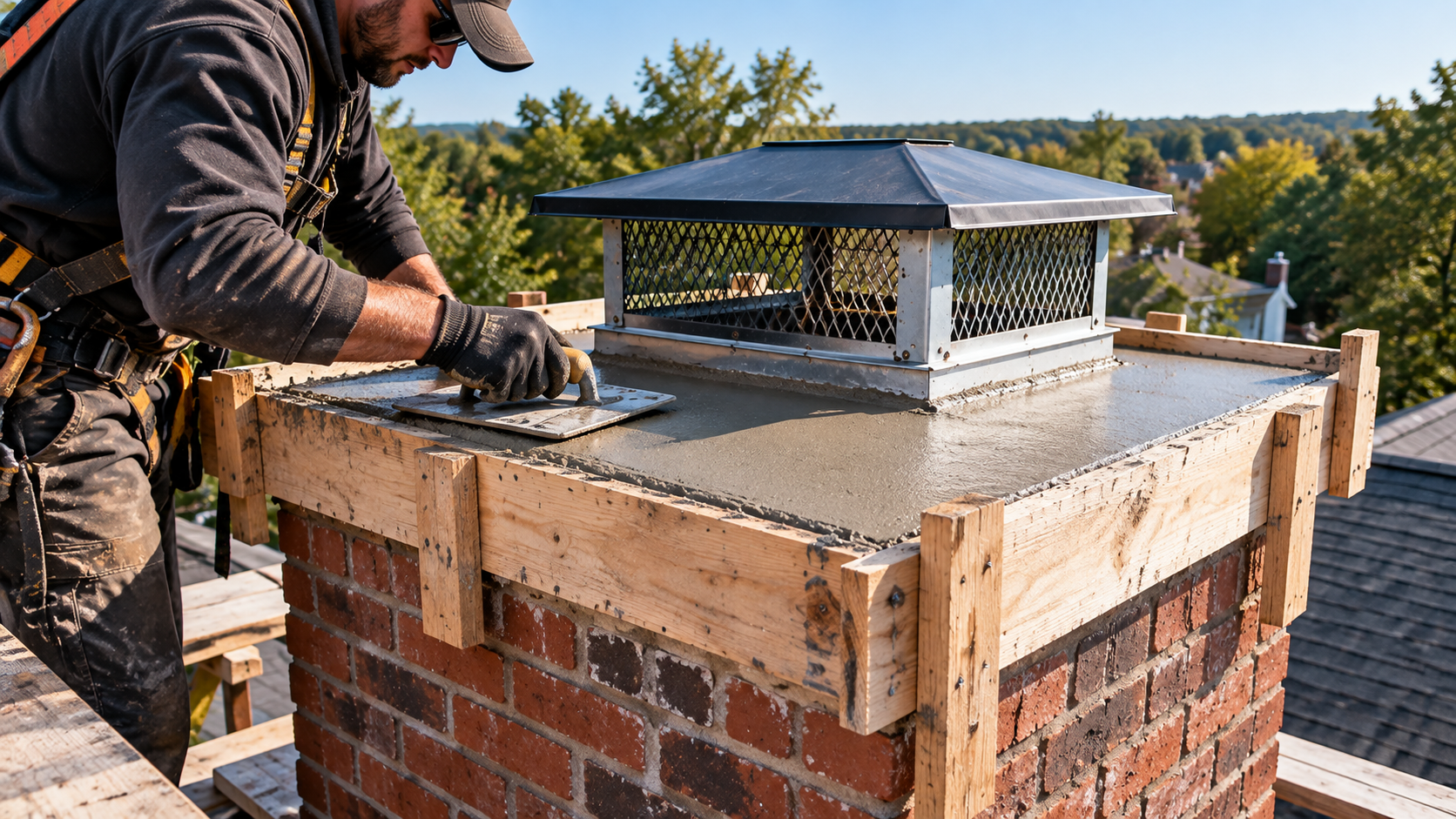
A chimney has two enemies: water and heat. Water gets into brick and mortar, freezes, expands and pries the masonry apart a little more every winter. Heat cycles the firebox and flue through thousands of degrees of expansion and contraction every season. Between them, every chimney in MetroWest eventually needs a mason.
Full Spectrum Chimney Services does that masonry in house. Tuckpointing, brick replacement, crown rebuilds, firebox and smoke chamber repair, partial and full rebuilds. One crew, one estimate, and the same people who inspected the chimney do the work.
- Matched materials: brick, mortar color and joint style to suit the existing chimney
- Refractory mortar rated for the heat inside a firebox, never standard cement
- Photos before and after, with a written itemized estimate in between
- Repairs sequenced right: structure first, then waterproofing
Signs Your Chimney Needs Repair
Six Things to Look for From the Yard
Walk around the house with binoculars once a year. These are the signs that a repair is due, and the longer they wait, the bigger they get.
Spalling Brick
Brick faces popping, flaking or lying in the gutter. Freeze-thaw damage that is already inside the wall.
Crumbling Mortar
Joints that are recessed, sandy or missing. Tuckpointing now prevents a rebuild later.
Cracked Crown
Hairline cracks in the concrete top widen every winter and send water straight into the stack.
White Staining
Chalky efflorescence on the brick means the masonry is saturated and pushing salts to the surface.
Lean or Gaps
A chimney pulling away from the house or a visible tilt is structural and should be looked at quickly.
Rust or Water Inside
A rusted damper, a damp firebox or stains on a ceiling near the chimney: water is already in. See our leak repair page.
Chimney Masonry Repair
What We Repair
From a single cracked joint to a full rebuild from the roofline up.
Tuckpointing and Repointing
Failed mortar is ground out and replaced with mortar matched to the original, so the joints shed water and the brick stays put.
Brick Replacement
Spalled or cracked bricks cut out and replaced with matching units, before the damage spreads to the courses around them.
Crown Repair and Rebuild
Minor cracks sealed, failed crowns re-poured in proper concrete with a drip edge and the slope that sheds water off the brickwork.
Partial and Full Rebuilds
When the top courses have gone soft, we take the stack down to sound brick and rebuild it, cap and crown included.
Flashing and Waterproofing
Flashing reset or replaced at the roofline, then a breathable water repellent once the masonry is sound.
Learn more →Flue Liner Restoration
Cracked clay tiles relined with stainless steel so the chimney contains heat and gases the way it should.
Learn more →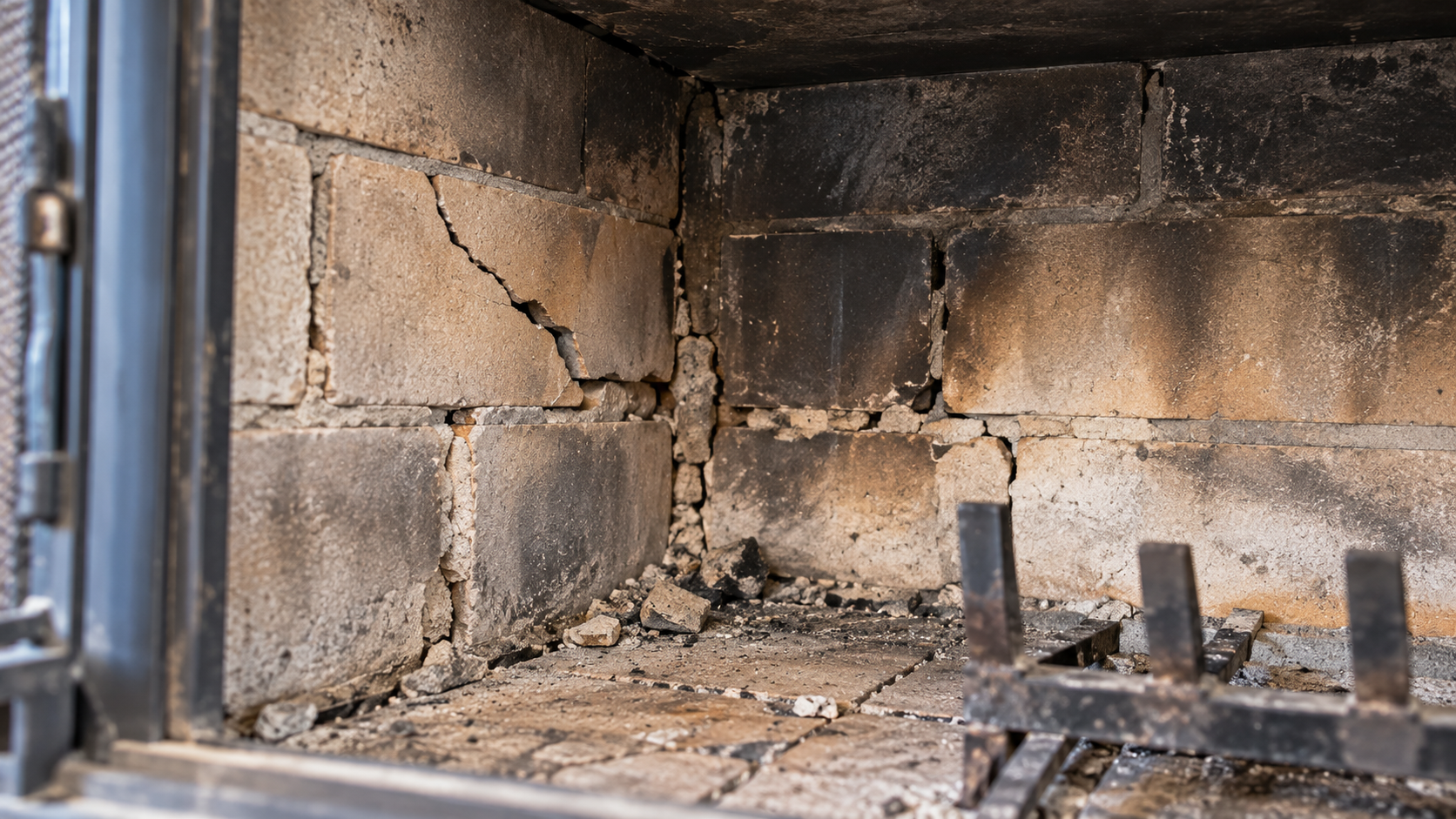
Fireplace Repair
Firebox, Smoke Chamber and Damper Repair
The firebox takes more heat than any other part of the system, and it cracks for a reason: every fire expands the firebrick and refractory mortar, every cooldown shrinks it, and after enough cycles the joints let go. Water from a leaking crown or open flue speeds it up, and so does burning trash or green wood.
We rebuild firebrick with refractory mortar rated for the heat, parge smoke chambers so they are smooth and sealed, and repair or replace dampers that have rusted, warped or stopped sealing.
Firebox Repair
Cracked joints raked and repacked with refractory mortar. Damaged firebrick replaced. Prefab refractory panels replaced when cracks run through.
Smoke Chamber Parging
The rough, stepped chamber above the damper is coated smooth with refractory parging to improve draft and close gaps that leak heat into the framing.
Damper Repair and Replacement
Rusted throat dampers freed or replaced, or upgraded to a top-sealing damper that closes the flue tight when the fireplace is not in use.
Stop using the fireplace and call us if a crack is wider than a quarter inch, runs through a firebrick or panel, if you can see light or feel heat on the wall behind the firebox, or if pieces of brick or mortar are falling out. Hairline surface cracks are often normal. Those four are not.
Our Process
How a Chimney Repair Works
Every repair starts with a look, not a quote.
Inspect and Photograph
We look at the whole chimney, not just the spot you noticed, and photograph every finding.
Written Estimate
Itemized, in plain language, with the safety items separated from the ones that can wait.
Repair with Matching Materials
Brick, mortar color, joint profile and refractory products chosen for your chimney, not a generic fix.
Seal and Walk Through
Waterproofing once the masonry is sound, then a walkthrough with after photos.
Chimney Repair Near Me
Repairs That Last Through New England Winters
A chimney repair done right should outlast the person who did it. That means mortar mixed to match the strength of the original brick, not a hard modern mix that cracks the brick around it. It means a crown poured in real concrete with an overhang, not a skim of mortar that fails in two winters. And it means fixing the reason water got in before sealing anything over.
Most repairs begin as a finding on a chimney inspection or a sweep. If yours has been a while, that is the place to start. A missing cap is the most common cause we see, and a new chimney cap is often the first line in the estimate.
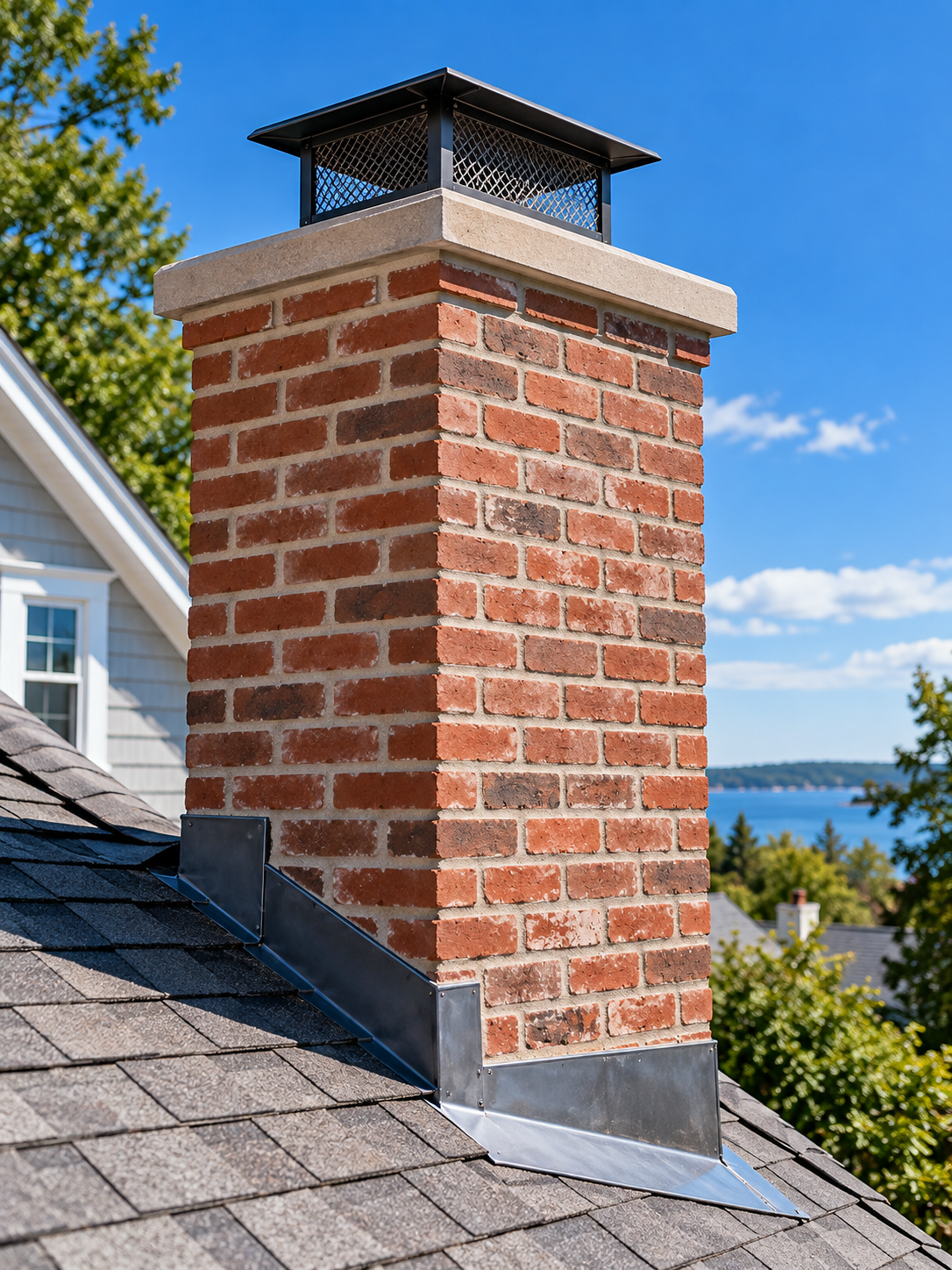
Every Freeze Pries the Crack a Little Wider
Water expands about 9 percent when it freezes. A mortar joint that weeps in October is a brick on the lawn by March. Small repairs stay small when they happen on time.
FAQ
Chimney Repair Questions, Answered
What are the signs my chimney needs repair?
Flaking or spalled brick, crumbling or recessed mortar joints, a cracked chimney crown, white chalky staining on the brick, a visible lean or a gap where the chimney meets the house, and rust on the damper or water in the firebox. Inside, smoke that will not draw and a damp or musty smell from the fireplace are also signs. Any of these call for an inspection before the next burning season.
What is tuckpointing?
Tuckpointing, also called repointing, is the process of grinding out failed mortar from the joints between bricks and packing in new mortar matched to the original. It restores the joints that shed water and hold the brick in place, and done on time it prevents the brick damage that leads to a rebuild.
Why is my firebox cracking?
Mostly thermal cycling. Every fire expands the firebrick and refractory mortar and every cooldown contracts them, and after enough cycles the joints fail. Water from a leaking crown, cap or flashing speeds it up as it freezes, burning trash or unseasoned wood creates extreme heat, house settling adds stress, and standard mortar used in place of refractory mortar fails quickly under direct flame.
Can a cracked firebox be repaired?
Usually, yes. Hairline cracks in mortar joints are raked out and repacked with refractory mortar rated for firebox temperatures. Cracked or crumbling firebrick is replaced individually. In a factory-built fireplace, a cracked refractory panel is replaced as a unit. A firebox with widespread failure is rebuilt.
Can I use a fireplace with cracked bricks?
Hairline surface cracks in the firebrick or mortar are common and usually not dangerous. Stop using the fireplace if a crack is wider than about a quarter inch, runs all the way through a brick or panel, if you can see light or feel heat on the wall behind the firebox, or if pieces are falling out. Those let heat, embers and gases reach the framing behind the fireplace.
How often do mortar joints need repointing?
On a well-built brick chimney, mortar joints commonly need repointing every 15 to 25 years, sooner on the exposed top courses that take the most weather. The brick itself can last 50 to 100 years or more if the joints, crown and cap are kept up.
Does homeowners insurance cover chimney repair?
It depends on the cause and the policy. Damage from a sudden event such as a chimney fire, lightning, a fallen tree or a windstorm may be covered. Deterioration from age, freeze-thaw cycles and deferred maintenance usually is not. A written inspection report with photos helps if you file a claim.
Do you repair the chimney or just the fireplace?
Both, and the roof-side parts in between. Our masons handle the exterior stack, the crown, the flashing, the flue liner, the smoke chamber, the damper and the firebox, all in house. That matters because a cracked firebox and a leaking crown are often the same water problem seen from two ends.
How much does chimney repair cost?
It depends on what has failed: a few repointed joints, a crown repair, brick replacement, a firebox rebuild and a full rebuild from the roofline are very different jobs. Chimney height, roof access and the extent of the damage all affect the price. Every job is quoted after an inspection. Contact us for a personalized estimate.
Contact Us
Long-Term Value Through Quality Craftsmanship
Full Spectrum Chimney Services repairs chimneys and fireplaces from our base at 945 Concord Street in Framingham and throughout MetroWest: Natick, Ashland, Sudbury, Marlborough, Weston and Newton. Masonry, crowns, fireboxes and liners, all by our own crew.
Call (774) 410-7673 or request a free estimate online, and fix it before the next freeze finds it.
Make Sure Your Fireplace Is Safe and Ready to Use.
Request a sweep, inspection, repair estimate or fireplace consultation today.
Free Estimates