Chimney Inspections
Chimney Inspections Framingham MA
Know What Is Inside Your Chimney Before You Light It
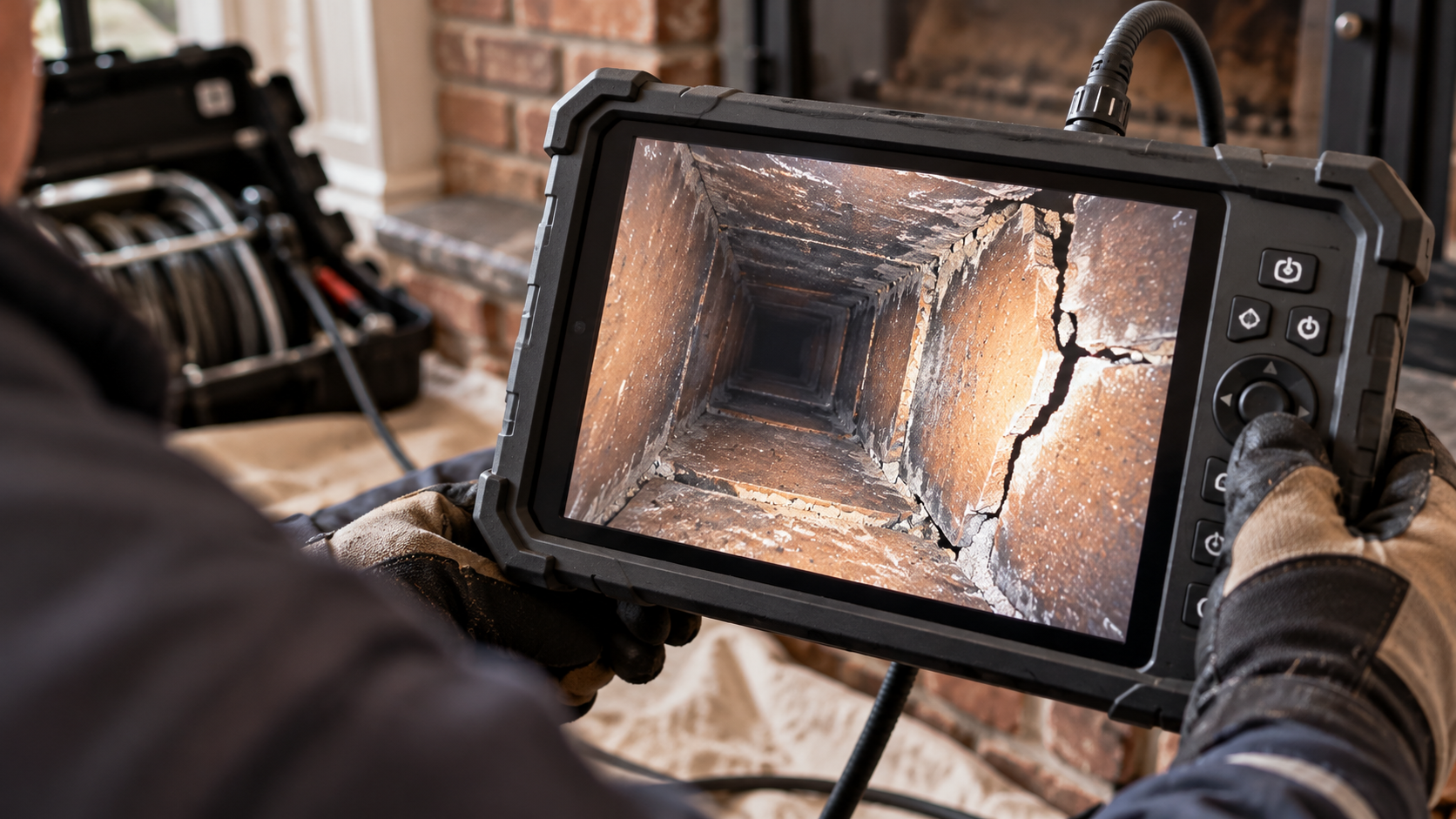
Almost everything that goes wrong with a chimney goes wrong where you cannot see it: above the damper, inside the flue, behind the firebox, in the attic where the stack passes through the framing. A chimney inspection is how you find out, and fire safety standards call for one on every chimney, every year, whether or not you used it much.
Full Spectrum Chimney Services performs Level 1 and Level 2 inspections across Framingham and MetroWest. Every visit ends with photos of what we found and a plain-language explanation of what, if anything, needs attention.
- Camera scan of the entire flue on every Level 2 inspection
- Inside and out: firebox to cap, plus attic and basement clearances
- Photo report you keep, useful for insurance and home sales
- Honest recommendations, no pressure to decide on the spot
Level 1 vs. Level 2 vs. Level 3
Which Chimney Inspection Do You Need?
The National Fire Protection Association defines three levels. Which one applies depends on what has changed since the last look.
The Yearly Check
When: every year, when nothing about the system has changed
Covers: readily accessible parts of the chimney, fireplace and connection, inside and out
Tools: flashlight and basic hand tools
Time: usually 30 to 60 minutes
The Thorough One
When: buying or selling a home, adding or changing an appliance or fuel, relining, after a chimney fire or severe storm
Covers: everything in Level 1 plus accessible attics, basements and crawl spaces, and a video scan of the full flue interior
Tools: chimney camera, clearance checks
Time: usually 1 to 3 hours
The Rare One
When: only when a Level 1 or 2 finds a serious hidden hazard that cannot be evaluated any other way
Covers: everything in Level 2 plus removal of walls, drywall, masonry or the crown to reach concealed areas
Tools: demolition and reconstruction
Time: half a day or more
Buying a home in MetroWest? A general home inspection looks at what is visible from the room and the roof. It does not scan the inside of the flue, where cracked liners and hidden damage live. A Level 2 inspection is the standard at any sale or transfer, and it is best scheduled before your inspection contingency runs out, while repairs can still be negotiated.
What We Check
Eight Points, Top to Bottom
- Cap: present, intact, mesh sound
- Crown: cracks, slope, drip edge
- Flashing: rust, lift, tar patches, gaps at the roofline
- Exterior masonry: spalling brick, open joints, staining, lean
- Flue liner: camera scan for cracked or missing tile, gaps, creosote stage and blockages
- Smoke chamber and damper: parging, operation, rust, seal
- Firebox: firebrick, refractory joints, hearth
- Clearances: framing and insulation too close to the chimney in the attic or basement
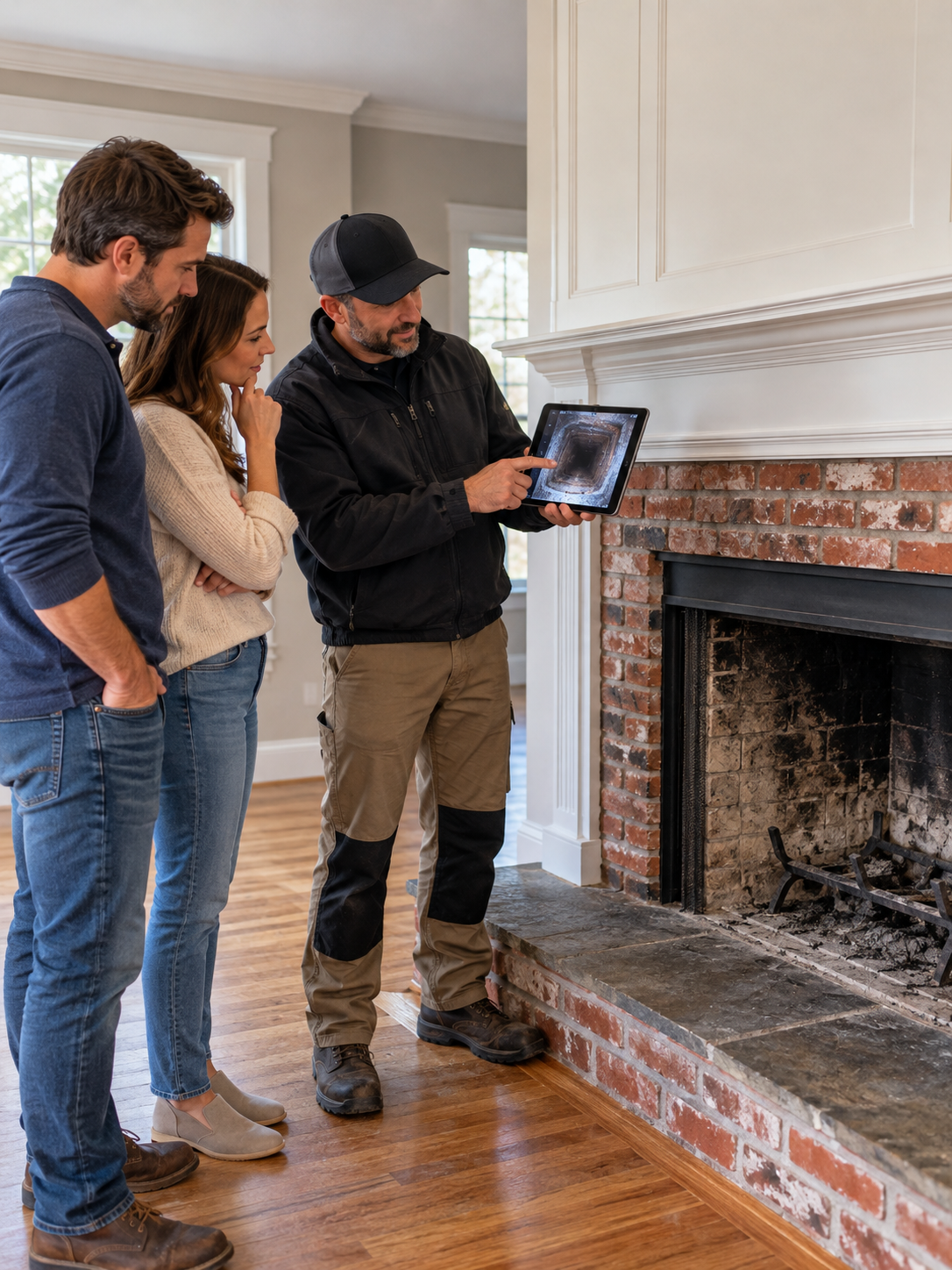
Every finding is photographed, and the report tells you which items are safety issues, which are maintenance, and which can wait. If something needs work, the same company that found it can fix it, from a sweep to a new liner.
What Inspections Find
The Six Problems We See Most
In rough order of how often they turn up in MetroWest chimneys.
Creosote Buildup
The flammable residue of wood smoke. Past 1/8 inch it is a fire risk and the flue needs a sweep.
Cracked Flue Liner
Cracked or missing clay tiles let heat and carbon monoxide escape. Usually a reline.
Crown and Masonry Damage
Cracked crowns, crumbling mortar and spalled brick from freeze-thaw winters. Repairs that get bigger every year they wait.
Missing or Damaged Cap
Open flues take in rain, animals and debris. The cheapest fix on the list.
Failed Flashing
Rusted or lifted flashing at the roofline is the most common source of ceiling stains near a chimney.
Clearance Problems
Framing or insulation touching the chimney in the attic. Invisible from the living room, and a real fire hazard.
Your Appointment
How a Chimney Inspection Works
The same process whether it is a yearly check or a pre-sale Level 2.
Book and Prep
Let the fireplace cool for 24 hours and clear the hearth. We bring drop cloths and boot covers.
Inside First
Firebox, damper, smoke chamber, then the camera goes up the flue on a Level 2.
Roof and Hidden Areas
Cap, crown, flashing and masonry from the roof, clearances in the attic or basement.
Photo Report
You see every finding on the screen before we leave, with written recommendations to follow.
Chimney Inspection Near Me
Why the Roof Matters as Much as the Flue
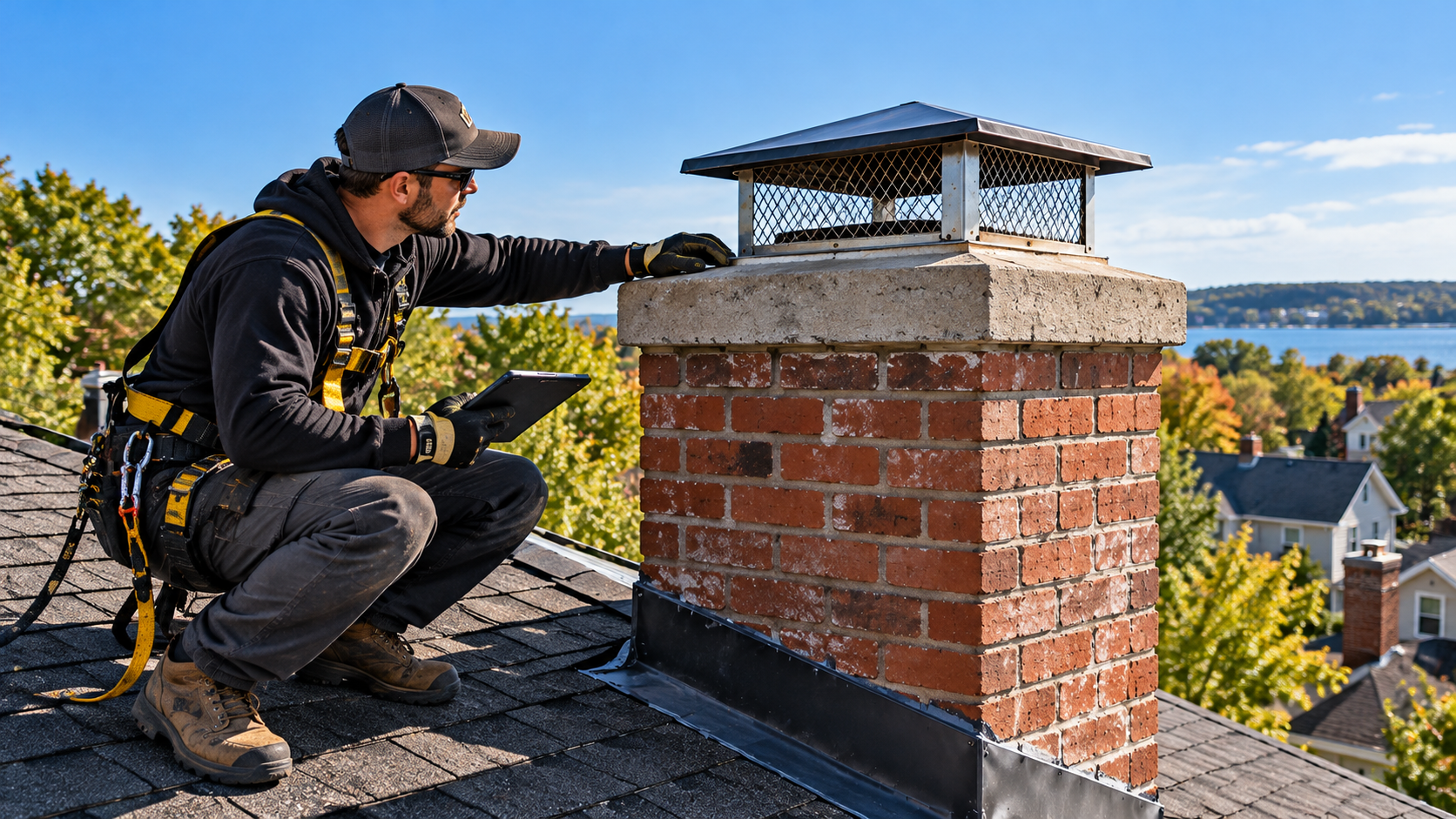
Half of what goes wrong with a chimney starts at the top. A hairline crack in the crown, a cap blown off in a nor'easter, flashing that has been smeared with tar instead of repaired. None of it is visible from the yard, and all of it lets water in. That is why every inspection includes the roof, and why so many of our leak repairs begin as an inspection finding.
If your chimney has not been looked at in a few years, or you just bought the house, start here. Keeping up with yearly chimney maintenance after that keeps the findings small.
Once a Year, Every Chimney, Even the One You Rarely Use
Light use slows soot. It does nothing to stop water, animals, freeze-thaw damage or age. An inspection is how you find out which one has been working on yours.
FAQ
Chimney Inspection Questions, Answered
How often should a chimney be inspected?
Once a year, according to National Fire Protection Association guidance, even if the fireplace is rarely used. Light use slows soot buildup but does not stop water damage, animal nests, freeze-thaw deterioration or age. Schedule an extra inspection after a chimney fire or severe storm, when an appliance or fuel type changes, or when buying or selling the home.
What is the difference between a Level 1 and Level 2 chimney inspection?
A Level 1 inspection is the yearly visual check of the readily accessible parts of the chimney and fireplace when nothing has changed. A Level 2 adds a video camera scan of the full flue interior and a check of accessible attics, basements and crawl spaces for clearances. Level 2 is the standard at a home sale, after a fire or major storm, or when the appliance or fuel changes.
Do I need a chimney inspection when buying a house?
Yes. A general home inspector looks at what is visible from the room and the roof but does not scan inside the flue or evaluate hidden parts of the system. A Level 2 chimney inspection can find cracked liners, clearance problems, water damage and blockages before closing, when repairs can still be negotiated. Schedule it before the inspection contingency expires.
How long does a chimney inspection take?
A Level 1 inspection usually takes 30 to 60 minutes. A Level 2 with a camera scan and attic or basement checks usually takes one to three hours. Multiple flues, heavy creosote, blocked cleanouts or a steep roof add time.
What do you look for in a chimney inspection?
The cap, crown, flashing and exterior masonry from the roof; the firebox, damper and smoke chamber from inside; the flue liner for cracked or missing tile, gaps, creosote and blockages; and the clearance between the chimney and any framing or insulation in the attic or basement. Every finding is photographed.
What is a Level 3 chimney inspection?
The most invasive and least common level. It includes everything in Level 2 plus the removal of walls, drywall, masonry or the chimney crown to reach concealed areas. It is only called for when a lower-level inspection points to a serious hidden hazard, usually after a chimney fire or structural event. The chimney cannot be used until it is finished and any repairs are made.
What are the most common problems found during a chimney inspection?
Creosote buildup, cracked or gapped flue liners, cracked crowns and deteriorating mortar, missing or damaged caps, failed flashing, broken dampers, and framing or insulation too close to the chimney. Most are inexpensive to fix when caught early and become major repairs when left.
Does a Level 2 inspection include a camera?
Yes. A video scan of the full flue interior is part of the Level 2 procedure. It is the only way to see cracked or missing tiles, open joints and damage above the damper that a flashlight cannot reach.
How much does a chimney inspection cost?
It depends on the inspection level, the number of flues, whether a camera scan is included, roof access and the condition of the system. Every inspection is quoted up front. Contact us for a personalized estimate.
Contact Us
Schedule Your Chimney Evaluation Today
Full Spectrum Chimney Services inspects chimneys from our base at 945 Concord Street in Framingham and throughout MetroWest: Natick, Ashland, Sudbury, Marlborough, Weston and Newton. Yearly checks, pre-sale Level 2 inspections and post-fire evaluations, every one with a photo report.
Call (774) 410-7673 or request a free estimate online, and know what is inside your chimney before you light it.
Make Sure Your Fireplace Is Safe and Ready to Use.
Request a sweep, inspection, repair estimate or fireplace consultation today.
Free Estimates